What's in a Stock Trading Plan
A trading plan gives you a detailed path to follow
Prior to initiating a trade, you need to ensure a trading plan is in place so you have your journey mapped out for you prior to the trade.

Bulls and bears are used to describe the up and down of the market. A bull tends to use its horns to lift oncoming threats out of
the way and raises them into the air which is the direction of a bull market. Bears
tend to come down on you from above hence they represent a bearish market or
one that is falling.
The above desk figurines depict the back and forth of the market as it unpredictably tends to move in a preferred direction. They make good gifts for traders, stock brokers or financial advisors.
Parts of a Trading Plan
Let's start out with a few definitions:
Trading signal - this in the very basics of a trading plan. For instance I buy at the opening the next day after a new 30 day high close is reached. On Dec 9, 2024 I found 745 stocks that met this requirement.
The trading signal goes inside a trading strategy. The strategy defines more clearly what the trader is looking for. For instance, only trade stocks where the 20 day moving average of volume is greater than 1 million shares, the price is between $5 and $50 and the 50 period moving average of the close has a positive slope. After adding the complete strategy, I found only 41 stocks that met the criteria.
By adding more criteria to your trading strategy you will reduce the stock selection process down to a workable number.
Once you have the trading strategy down, you can start to work on the trading system.
The Trading Plan or System
When I started trading, I did not have a stock trading system. I had an idea of what I wanted to trade and never put it down on paper. Once it is written down, and you are committed to following your plan, your results should start to improve. Your plan should be keeping you out of mediocre trades and focusing you on only the best trades.
Following a trading system is not easy, you will see stocks you want to trade that do not follow your trade plan. When you consistently want to trade stocks which are not covered by a trading plan, write another one. You can have more than one trading plan. As some suggestions, you could have a plan to cover a trend trade, gap trade, bounce, consolidation breakouts, high volume situations or any other ideas which you can come up with.
My trading plan has a number of specific parts and I will detail one of my plans below and describe what each section is for. You can view this trading plan pdf which might give you some ideas. Remember, this is just a plan, it is a beginning and it does not work all of the time.
Resistance to Rules
It is amazing the number of traders who do not want or have a trading system. Trading the market can be about freedom as there are very few rules for the average trader. Unfortunately, with this attitude you will likely end up losing most of your capital. Most people would rather lose hundreds of dollars to the market than write and follow a trading plan.
I am not the only one who says this. Having a written trading plan and following it are the hallmarks of a good trader. Here are just a few lines from a couple of books I have read on the subject.
A written plan is the hallmark of a serious trader - Come Into My Trading Room by Alexander Elder
If there is one winning strategy I can recommend wholeheartedly for dealing with emotional trading, it is becoming more rule governed. The Psychology of Trading by Brett Steenbarger
In an unstructured and unlimited environment, it is essential that you establish rules to guide your behaviour. The Disciplined Trader by Mark Douglas
The only time I win consistently is when I follow the rules religiously. Successful Stock Market Speculation by Ted Carter
Do yourself a favor and write out a trading plan. Since essentially every successful trader I have come into contact with has trading rules, why don't you.
Still don't want to put your plan down on paper, the next time you have a loss in the markets, look at the trade and identify the actions you are taking to produce the loss. Would a plan help you?
Parts of a Trading Plan - The Title
Medium Risk Trading Strategy: Breakout from Consolidation
The title clearly indicates what this plan is looking for. This is a trading plan I could use when I see a stock consolidating and I want to buy the breakout.
Strategy Theory
Assume Newton's first law of motion holds and that a stock will continue to follow the direction it has been going in after the consolidation. The entry point is above the consolidation in up trending stocks and below the consolidation in down trending stocks.
The strategy theory tells me why the method will work. It is based on a sound principle and while I do not expect it to work every time it should, if the theory is valid, produce more winners than losers. Compare this to: buy stocks hitting new lows in the hopes that they will rebound.
Strategy Goal
Capture short-term profits on stocks by buying on a resumption of the trend.
This statement tells me what I am going after. For instance, this stock plan is for short term trades not long term or day trades.
Search or Watchlist Criteria
On a daily basis, watch a list of stocks that have hit a new 13 week high in the last 20 days. Update the watchlist at the start of each month. Look for horizontal or ascending triangle consolidations. Don’t trade foreign traded stocks, ones with lots of gaps or ones that don’t move much. Average volume is above 500,000 with a close above 5.
The search or watchlist criteria tell me how I am expected to identify a trade. In this case, I am watching a list of stocks. In this section, I will also describe how I have set up a stock screener to find specific stocks.
Entry Rules
Buy 1% above the consolidation
Here, I describe how I will get into the trade.
Exit Rules
- Initial stop is 1 % below the consolidation or ascending triangle trendline
- Move stop to 1% below the mid point of any visually significant move
- Move stop loss to break even as soon as possible, get out after 5 days if no major movement
- When 200 or more shares are owned, sell half the position after a large move when a gain shows 2:1 plus reward:risk
- Trail the market by a day and move stop loss to 1% below the last low once a new high is reached
- Move stop under a consolidation area if one forms during the holding period
In the exit rules section I define all of the ways I will exit a trade. Note, I only get into the trade one way and have multiple exit strategies.
Risk/Money Management
- Aim is to return a minimum 2 to 1 reward to risk with a winning percentage of 40+%
- Put a maximum of 15% of my account into any one trade
- Risk 0.5% of your account when win/loss is greater than 50% and 0.25% when win/loss is below 50%
The risk and money management section is designed to protect the account from a major draw down. Limiting the amount you put into each trade restricts the amount you can make in a trade and more importantly, reduces the amount you can lose in a trade.
Summary
Your rules are not written in stone and evolve as you evolve as a trader. After taking a number of trades with a specific trading plan you may realize that the plan needs some work or something is not working. At this point, tweak your plan. Also, remember that one plan is not going to work in all markets. This is why you will require multiple trading plans to get you through.
Well I hope the above
information has given you some ideas on how you can move forward.
Gifts for Stock Traders - Stock traders are a different breed. For the stock trader in your life or as a present to yourself consider getting a trading mug. This can be used throughout the day to sip on your favourite beverage and remind you that you are a trader.


I am so proud that my first book is out. Featured in the Sept. 20, 2020 issue of Technical Analysis of Stocks & Commodities on page 62.
Dating the Stock Market
10 Key Mindsets
You Need to Excel as a Trader


Monte Carlo Simulator
for Traders
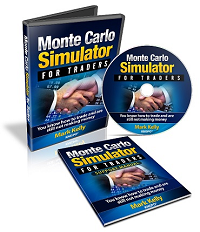 Having troubles sticking with your trading system?
Do you move from system to system looking for the one system that will bring you riches?
Perhaps you already have it and tossed it aside when it went into a down period.
Using this Excel based program will show you what you can expect out of your trading system once you know the % wins and profit factor.
Stop wasting your time searching for the perfect system (which does not exist) and start trading.
$20.00